


04 Mar 2026
What is the Difference Between Drainage and Sewage
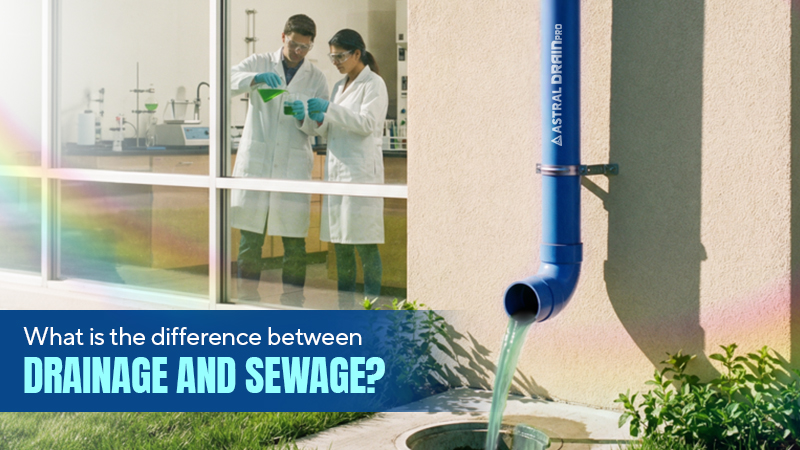
When you flush a toilet or watch rainwater disappear down a street drain, have you ever wondered how that water is managed? Most Indian homeowners assume all wastewater follows the same path. This confusion can lead tolumbing mistakes, health risks, and costly repairs. The difference between drainage and sewage is technical in nature. But it can also affect your family’s health and your property’s safety. Drainage typically handles stormwater and, in some building systems, greywater from washing activities. Sewage carries human waste from toilets. These two systems must never be mixed, yet sometimes buildings accidentally connect them, creating contamination risks.
Understanding this distinction helps you make better decisions when building, renovating, or maintaining your home’s plumbing system.
What is a Drainage System?
A drainage system collects and removes surface water and greywater from buildings. Surface water includes rainwater that falls on roofs, balconies, and open spaces. Greywater comes from washing activities such as your kitchen sink, bathroom basin, shower, and washing machine. Drainage systems use pipe networks or surface channels to transport water away. The goal is to prevent waterlogging, protect the building foundations, and manage monsoon runoff efficiently.
Common drainage sources include:
- Rooftop rainwater collection
- Balcony and terrace water
- Kitchen sink wash water
- Bathroom basin and shower water
- Washing machine discharge
- Garden and landscape runoff
Drainage pipe systems typically use pipes such as Astral DrainPro or Silencio, designed specifically for these lower-risk applications. Health risk is lower than sewage but can still pose contamination risks if unmanaged.
What is a Sewage System?
A sewage system is a dedicated network that transports blackwater, the technical term for water contaminated with human waste. This includes everything flushed down toilets, along with the organic matter and bodily fluids it contains. Sewage represents a serious biohazard. It carries harmful bacteria, viruses, and pathogens that cause diseases like cholera, typhoid, and hepatitis. This is why sewage pipe systems require completely sealed, leak-proof construction.
Sewage sources include:
- Toilet flush water
- Human excreta
- Organic waste from toilets
Sewage must always flow through treatment plants before release into the environment. Building codes across India strictly mandate separate sewage systems with heavy-duty, sealed pipes like Astral Drainmaster.
Understanding SWR Pipe Types
What does SWR mean?
SWR stands for Soil, Waste, and Rainwater, a pipe system used for building drainage and sewage conveyance. These are uPVC pipes designed specifically for drainage and sewage applications in buildings. Indian Standard IS 13592 classifies SWR pipes into two main types based on their application.
SWR Type A pipes:
- Purpose: Rainwater drainage and vent pipes
- Application: Rooftop rainwater collection, balcony drains, vent stacks
- Characteristics: Moderate wall thickness for non-contaminated water
- Use case: Collects and transports rainwater away from buildings
SWR Type B pipes:
- Purpose: Soil and waste discharge (sewage)
- Application: Toilet connections, main sewage lines, underground waste disposal
- Characteristics: Thicker walls, heavy-duty construction, sealed joints mandatory
- Use case: Transports human waste from toilets to treatment systems
Example: Astral Drainmaster is an SWR Type B pipe, specifically engineered for sewage applications with leak-proof construction.
Each pipe type serves specific purposes based on water contamination levels, flow requirements, and installation conditions.
Key Differences Between Drainage and Sewage
|
Aspect |
Drainage System |
Sewage System |
| Water Type | Rainwater, greywater from washing | Blackwater with human waste |
| Health Risk | Low to moderate | High biohazard level |
| System Design | Closed pipes | Fully sealed pipe networks |
| Pipe Type | Astral DrainPro, Astral Silencio | Astral Drainmaster |
| Maintenance | Regular cleaning, debris removal | Professional handling with safety gear |
| Pipe Strength | Moderate, corrosion-resistant | Heavy-duty, thick walls, sealed joints |
| Treatment Need | Minimal or none | Must go to treatment plants |
The difference between drainage and sewage extends beyond water type. Each system serves distinct purposes, carries different risks, and requires specific pipe materials. Mixing these systems violates building regulations and creates public health emergencies.
Why Must Drainage and Sewage Stay Separate?
Indian building codes require separate systems for operational reasons. When drainage and sewage mix, contaminated water spreads disease-causing organisms across your property and neighbourhood.
1. Health protection comes first: Sewage contains pathogens that can cause serious illnesses. If sewage enters drainage pipes, rainwater and wash water become contaminated.
2. Treatment requirements differ completely: Drainage water often needs minimal treatment before release or reuse. Sewage must pass through treatment plants where biological processes break down waste and kill pathogens. Combining these systems overwhelms treatment facilities and reduces effectiveness.
3. Pipe specifications serve different purposes: A sewage pipe needs thicker walls and perfectly sealed joints to prevent leakage. Even tiny cracks allow contaminated water to seep into soil and groundwater. Drainage pipe specifications focus on flow capacity and corrosion resistance rather than absolute leak prevention.
4. Pressure conditions vary significantly: Sewage systems are primarily gravity-based but may use pumps where required. Drainage relies primarily on gravity flow. Mixing these creates hydraulic problems and system failures.
Choosing the Right Pipes for Each System
Selecting appropriate pipes prevents contamination and maintains system integrity. The wrong pipe choice leads to leaks, blockages, and health hazards.
For drainage systems, consider these options:
Astral DrainPro (3-layer Polypropylene):
- Application: Demanding drainage needs, underground drainage, heavy-traffic areas
- Features: Mineral-filled 3-layer construction withstands heavy loads while the smooth interior prevents clogging
- Suitable for: Residential and commercial drainage, basement drainage, parking areas
- Temperature resistance: Handles up to 90°C long-term, 95°C short-term
Astral Silencio (Mineral-reinforced PP):
- Application: Low-noise drainage for modern apartments and residential buildings
- Features: Mineral-reinforced middle layer significantly reduces noise from waste discharge while maintaining structural strength
- Suitable for: Residential buildings, hotels, and hospitals where sound insulation matters
- Temperature resistance: Up to 90°C, excellent sound insulation properties
SWR Type A (uPVC):
- Application: Rainwater drainage, vent pipes, rooftop collection systems
- Features: Moderate wall thickness, smooth interior for efficient flow
- Suitable for: Non-contaminated water applications, above-ground drainage
Underground Drainage System (uPVC/PVC):
- Application: Stormwater drainage, surface water management
- Features: Corrosion-resistant, suitable for buried installations
- Suitable for: Roads, pavements, outdoor drainage networks
For sewage systems, specifications become stricter:
Astral Drainmaster (SWR Type B uPVC):
- Application: Soil and waste discharge from toilets, main sewage lines
- Features: Thicker walls meeting Type B specifications, heavy-duty construction, leak-proof design
- Suitable for: Toilet connections, underground sewage lines, main waste discharge systems
- Temperature resistance: Handles hot water discharge from bathrooms
All sewage pipe installations require sealed joints using proper solvent cement. Any gap or crack allows contaminated water to escape, creating health hazards and property damage.
-
11 May 2026
Types Of Plumbing Pipes Used in Home -
08 May 2026
What is a Surface Drainage Channel? -
03 May 2026
CPVC Pipe Quality Standards in India: What Buyers Must Know? -
30 Apr 2026
Why UV-Protected Plastic Water Tanks Are Essential for Indian Weather? -
25 Apr 2026
Guide to Choosing the Right PVC Solvent Cement