

11 Feb 2026
Different Types of Drainage Systems: How to Pick the Right One?
Different types of drainage systems help Indian homes, buildings and farms deal with sudden rain, waterlogging, wastewater management, and damp walls. When the right drainage pipe and layout are chosen, the site stays safer, durable and easier to maintain in the long run.
What is a Drainage System?
A drainage system is a planned network of pipes, channels and structures that collect, carry and discharge excess water from a property or land. This system manages rainwater, groundwater and surface runoff so that water does not stagnate on the surface or around foundations.
Key Functions of a Drainage System:
- Collect water from roofs, paved areas, soil and open spaces
- Convey water safely away through a drainage pipe network
- Discharge water appropriately based on its type:
- Roof rainwater → recharge pits/wells
- Surface runoff from paved areas → municipal stormwater drains (may need treatment)
- Sewerage and wastewater → treatment systems or septic tanks (never mixed with rainwater)
Why are Drainage Systems Important?
Outdated or clogged drains lead to waterlogging. It can also lead to traffic disruption and flooding during heavy monsoon spells. A well-installed drainage system reduces these risks by giving water a defined and safe path to flow.
Good drainage also protects soil health and building foundations. It reduces erosion and prevents dampness in basements and walls. This supports healthier landscaping or agricultural productivity.
Different Types of Drainage Systems
Modern properties typically employ multiple types of drainage systems. Each type handles water at a different stage or location in and around the site.
1. Stormwater Management Systems
Stormwater management systems handle rainwater and surface runoff from roofs, roads, paved areas and open ground. These are the primary systems that protect properties from monsoon flooding and waterlogging. Stormwater management includes three main sub-categories:
A. Surface Drainage System
Surface drainage systems manage visible water that collects on open ground, roads, courtyards or paved areas. These systems guide surface runoff away before it can pool and cause damage or inconvenience.
Common surface drainage elements include:
- Open channels, shallow ditches or swales to guide runoff
- Grated trench drains along driveways, parking areas or entrances
- Catch basins or surface inlets that drop water into underground drainage pipelines
B. Subsurface Drainage System (French Drains)
Subsurface drainage systems handle water present below ground level, often called groundwater or seepage. French drains are a popular form of drainage setup, especially near basements, retaining walls and waterlogged lawns.
A French drain is usually a gravel-filled trench. The pipe is wrapped in filter fabric (geotextile), not just having a filter layer around it. The fabric prevents soil from entering the perforations while allowing water through. Water enters through the gravel, flows into the pipe and is discharged at a safe outlet away from the problem area.
C. Gutter and Downspout System
Gutter and downspout systems collect rainwater from roofs and move it away from the building. Without them, water can fall directly near plinths. This can lead to seepage, wall dampness and foundation stress.
Key parts of this drainage system include:
- Gutters attached along roof edges to catch rainwater
- Vertical downspouts that carry water downwards
- Connection points where downspouts discharge into surface drains, recharge pits or underground drainage pipes for rainwater harvesting
2. Slope Drainage System
Slope drainage systems use gravity to move surface runoff down a slope in a controlled manner. They are often used on embankments, hillsides, podium landscapes and roadside cuttings.
These systems can include:
- Pipes laid along or across slopes to carry water down safely
- Trench drains at the bottom of slopes to collect descending water
- Lined channels that prevent soil from washing away during heavy rain
3. Sewerage Drainage System
Sewerage drainage systems are distinct from stormwater systems. They handle wastewater from toilets, kitchens, bathrooms and other sanitary fixtures inside buildings. This wastewater contains organic matter and requires proper treatment before discharge.
Key components include:
- Soil pipes for toilet waste
- Waste pipes for sinks, showers and washing machines
- Vent pipes to balance air pressure
- Inspection chambers and manholes for maintenance
- Connection to septic tanks or municipal sewer lines
Note: Sewerage systems should never be mixed with stormwater drainage systems to prevent contamination and system overload.
Types of Drainage Systems
| Drainage System Type | Main Purpose | Where it is Used Most Often |
| 1. STORMWATER MANAGEMENT SYSTEMS | Manage rainwater and surface runoff from properties | All buildings, roads and open areas are exposed to rainfall |
|
Remove standing water on open surfaces | Gardens, farms, parking areas, internal roads |
|
Lower groundwater levels prevent seepage | Basements, lawns, retaining walls, waterlogged fields |
|
Collect and guide roof runoff away from buildings | Residential and commercial building rooftops |
| 2. SLOPE DRAINAGE SYSTEM | Control water flow on slopes using gravity | Hill roads, embankments, podium landscapes, roadside cuttings |
| 3. SEWERAGE DRAINAGE SYSTEM | Remove wastewater from sanitary fixtures | Toilets, kitchens and bathrooms in all buildings |
Note: Stormwater management systems work together to handle rainwater: surface drains collect visible water, subsurface drains control groundwater and gutters channel roof runoff. Sewerage systems must always remain separate from stormwater systems to prevent contamination.
How to Pick the Best Drainage System?
The best drainage system for a site depends on rainfall pattern, soil type, building layout and local regulations. A combination of systems is often used to handle water at surface, subsurface and roof level effectively.
1. Analyse Your Site Condition
Start with a basic assessment of the property and surroundings. Look at soil type, slope, low spots, nearby drains and how water currently flows or stagnates after rain.
Questions to ask:
- Is the site flat, gently sloping or steep?
- Does water collect near plinths, in basements or on the terrace?
- Is the area connected to a municipal stormwater drainage system?
Points to note:
- Sandy/gravelly soil → subsurface drainage works well
- Clay soil → French drains may not work; needs surface drainage
- Black cotton soil (common in Maharashtra) → swells when wet, special considerations
2. Identify the Purpose
Every drainage design should have a clear goal before the selection of components. For a home, the aim may be to protect foundations and keep outdoor areas usable. But, in agriculture or industry, the priority may be soil health or process safety.
Common purposes include:
- Preventing waterlogging in gardens or fields
- Protecting basements and retaining walls from seepage
- Managing stormwater in heavy rainfall zones across India
- Safely removing sewerage from sanitary fixtures
3. Choose the Right Drainage Pipe
In India, PVC, PP and HDPE pipes are widely used for different drainage systems.
Key points while choosing a drainage pipe:
- Materials: HDPE and PP are common for house drainage due to their durability and corrosion resistance. PVC pipes are used for underground drainage systems.
- Application: Use dedicated pipes for each type of drainage: sewerage systems require different specifications than stormwater or subsurface drainage.
- Size and slope: Pipe diameter and gradient must match the expected flow to avoid blockage or backflow.
- Compatibility: Pipes, fittings and manholes should follow relevant Indian standards for safer performance over time.
4. Consider Installation and Maintenance
A drainage system works well only when it is installed correctly and kept clear of debris. Poor gradients, joints or backfill can lead to frequent choke-ups or structural damage.
Points to keep in mind:
- Use trained technicians who follow layout drawings and standards
- Provide inspection chambers or manholes at suitable intervals for cleaning
- Plan for periodic checks before and during the monsoon, especially for surface drains and gutters
5. Safety and Compliance
Drainage design must respect local building byelaws and environmental norms. Wrong discharge points or undersized lines can create a nuisance for neighbours and strain city infrastructure.
Good practice includes:
- Connecting stormwater drains to approved outlets as per local authority rules
- Do not mix sewage with stormwater in the same drainage pipe network
- Following national and municipal guidelines for rainwater harvesting, reuse and sustainable drainage where applicable
Why Choose Astral Pipes’ Drainage Systems?
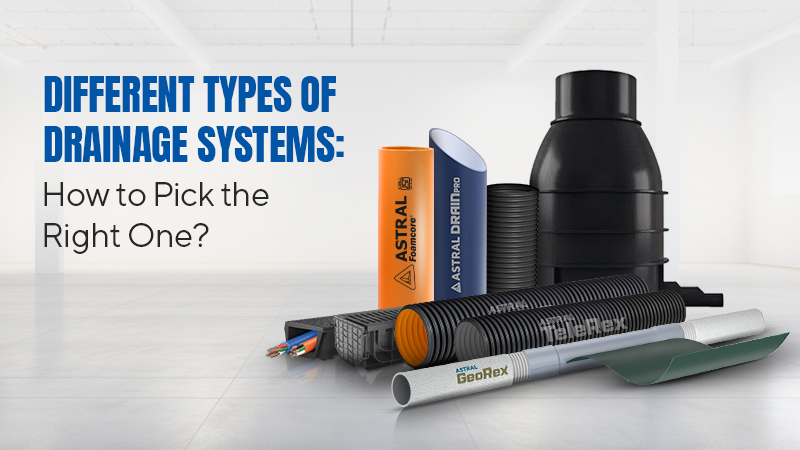
Astral drainage pipes are a strong choice. They combine advanced materials, robust performance under demanding conditions and an extensive, application-wise product mix that covers almost every drainage need from inside buildings to deep underground infrastructure.
For Stormwater Management
- DrainPro (3-layer PP): For surface drainage and rainwater channels with high impact resistance
- Silencio (mineral-reinforced PP): For low-noise stormwater drainage in residential buildings
- Underground Drainage System (PVC): For subsurface stormwater networks and French drains
For Sewerage Systems:
- Drainmaster (uPVC SWR): For wastewater from toilets, kitchens and bathrooms with leak-proof joints
For Specialised Applications:
- Geo-Rex: For subsurface drainage and groundwater management in agricultural fields
- Foamcore Pipes: For high-flow underground applications with superior strength
Our range stands out for offering specialised designs for high flow, low noise, chemical resistance and long service life. Each product is engineered to meet specific drainage challenges across residential, commercial, industrial and agricultural applications.
Explore Astral drainage pipes and fittings today.
-

30 May 2026
What Type of Pipe to Use for Underground Drainage -
27 May 2026
What Is an Inspection Chamber in Drainage -
24 May 2026
Top Benefits of Using Certified Potable Water Pipes -
22 May 2026
Why You Should Prefer UPVC Plumbing Pipes for Summer Weather Use -
20 May 2026
Best Ways to Keep Your Water Tank Cool in Summer