



20 Apr 2026
Why PVC Conduit Pipes are a Smart Way to Save Time and Money
Why is the electrician asking for plastic conduit again?’ If that question pops up every time you renovate or build, you are not alone. Most home-owners worry that choosing the wrong cable protection pipe will cost money later. However, the right PVC conduit pipes keep wires safe, projects on schedule and repair bills low. Below is a quick guide written for Indian homes, apartments and commercial sites.
What are PVC Conduit Pipes?
PVC conduit pipes are rigid or flexible tubes that carry electrical wires from the distribution board to switches, sockets and appliances. They shield cables from heat, moisture, rodents and accidental nails. Unlike metal, plastic conduit cable pipes do not conduct electricity, so the risk of short circuits drops.
Why Choosing the Right Cable Protection Pipe Matters?
A cheap, thin cable pipe cracks within months. Replacement means breaking walls, paying extra labour and losing days. A quality plastic conduit keeps walls intact for decades. The correct choice meets standards and helps you pass electrical inspections on the first visit.
Key Benefits of Using PVC Conduit Pipes
- Lightweight
- Push-fit sockets
- Fire-retardant PVC
- UV-resistant grade for terraces and balconies
- Smooth inner bore pulls 3-core cable without kinks
- Termite-proof and never rusts in coastal cities
- Recyclable at end of life, helping green building points
Types of PVC Conduit Pipes
1. Rigid PVC Conduit
Used for exposed wall and ceiling runs. These pipes are durable and rigid. They are available in a minimum of 3-metre lengths with built-in sockets.
2. Flexible Cable Pipes
Their flexibility allows you to bend them around curved false ceilings and prefab corners. This is why they are ideal for retrofit jobs where chasing walls is not allowed.
3. Corrugated Plastic Conduit
Light grey ribbed pipe that tolerates concrete pour pressure. Fits inside slabs before cement is laid.
4. Cable Protection Pipe for Outdoor and Underground Use
Heavy-wall orange conduit cable pipes with good compression strength.
How PVC Conduit Pipes Help Save Time & Money: Explained Simply
1. Faster Project Completion
Push-fit joints help to cut installation time. A three-room flat that needed four days with GI pipes now finishes in two.
2. Fewer Repairs Over Time
PVC does not rust or scale. No periodic painting, no threading re-work.
Why PVC is Better Than Metal Conduits?
GI conduit costs more per metre, needs skilled threading, adds weight to the slab and conducts stray current. PVC gives insulation, weighs one-sixth and simply snaps together.
Why Choose Astral PVC Conduit Pipes?
Astral Pipes makes the widest range of cable pipes in India, from 16 mm to 63 mm. Every batch is tested for impact, compression and Vicat softening temperature.
Astral Wire Guard PVC conduit pipes guard cables in concealed wiring. This range of cable pipes stops fire from racing through walls, lifts impact strength and blocks light. Three wall grades slip into concrete, soil or surface work. Solvent joints set in hours and stay tight against moisture, acids and day-to-day knocks. Use Wire Guard cable pipes and give your homes a quiet, long-life cable armour without adding weight or cost.
-
11 May 2026
Types Of Plumbing Pipes Used in Home -
08 May 2026
What is a Surface Drainage Channel? -
03 May 2026
CPVC Pipe Quality Standards in India: What Buyers Must Know? -
30 Apr 2026
Why UV-Protected Plastic Water Tanks Are Essential for Indian Weather? -
25 Apr 2026
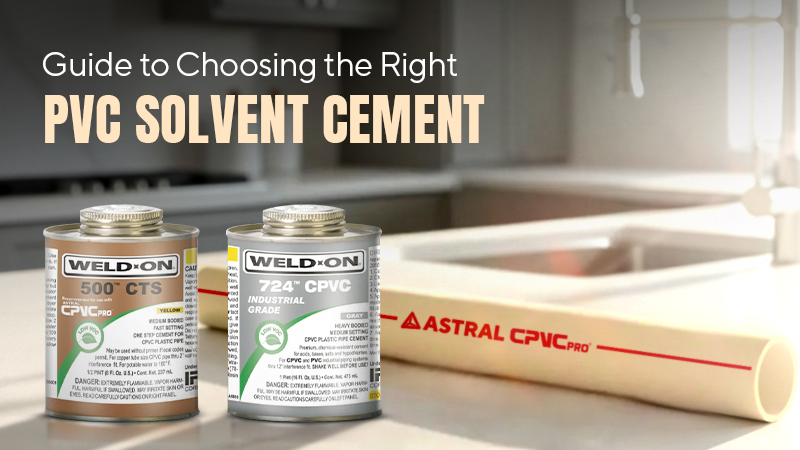
Guide to Choosing the Right PVC Solvent Cement